Buy lovebag.eu ?
We are moving the project
lovebag.eu .
Are you interested in purchasing the domain
lovebag.eu ?
domain@kv-gmbh.de · 0541-91531010
Buy lovebag.eu ?
How do you calculate the following telescoping sum?
To calculate a telescoping sum, you first need to express the summands as a partial fraction decomposition. Then, you simplify the sum by pairing up terms that cancel each other out when added together. Finally, you evaluate the remaining terms to find the sum of the series. This method allows you to simplify the sum and find a closed-form expression for the sum. **
'How do I calculate the limit of this telescoping series?'
To calculate the limit of a telescoping series, you can first express the series as a partial sum and then take the limit as the number of terms approaches infinity. For example, if you have a series like 1 - 1/2 + 1/2 - 1/3 + 1/3 - 1/4 + ..., you can group the terms and simplify to find a pattern. In this case, you'll notice that most terms cancel out, leaving you with just 1 as the limit of the series. **

Similar search terms for Telescoping
Top-Angebote
Products related to Telescoping:


-
How do I calculate the limit of this telescoping sum?
To calculate the limit of a telescoping sum, you can first find the general term of the sum and then take the limit as the number of terms approaches infinity. The general term of a telescoping sum can often be found by expressing each term as a difference of two terms. Once you have the general term, you can then take the limit as the number of terms approaches infinity to find the value of the sum. This process allows you to find the limit of the telescoping sum without having to explicitly calculate each term. **
-
How do I determine the limit of this telescoping sum?
To determine the limit of a telescoping sum, you can first write out the general form of the sum and then try to simplify it by canceling out terms. This will often result in a simpler expression that can help you find the limit. You can also try to express the sum as a difference of two series and then find the limits of each series separately. Finally, you can use the properties of limits to find the limit of the telescoping sum. **
-
Backpack or handbag?
It ultimately depends on the individual's needs and preferences. A backpack is often more practical for carrying heavier items and distributing weight evenly, making it a good choice for commuting, traveling, or outdoor activities. On the other hand, a handbag may be more suitable for professional or formal settings, as well as for carrying lighter items. Some people may even opt for both, using a backpack for daily essentials and a handbag for more formal occasions. **
-
What is the representation of the partial sums Sn as a telescoping sum?
The representation of the partial sums Sn as a telescoping sum is a sum in which most of the terms cancel each other out, leaving only a few terms that do not cancel. This allows for a simpler expression of the sum, making it easier to compute. In the case of partial sums Sn, the telescoping sum representation allows us to express Sn as the difference between two consecutive terms in the sequence, which simplifies the calculation of the sum. **


Do you carry a backpack or a handbag?
As an AI, I do not carry a backpack or a handbag. However, many people choose to carry a backpack for its practicality and ability to distribute weight evenly, while others prefer a handbag for its style and convenience. The choice between a backpack and a handbag often depends on individual preferences, daily activities, and personal style. **
From which grade onwards do students use a regular backpack instead of a satchel?
Students typically start using a regular backpack instead of a satchel from around 4th or 5th grade onwards. At this age, students often have more books and supplies to carry, and a backpack provides better support for their growing bodies. Additionally, as students become more independent and responsible for managing their own belongings, a backpack offers more space and compartments to organize their items. **
Top-Angebote
Products related to Telescoping:
-
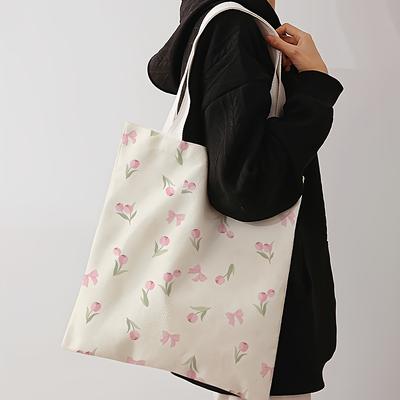
ModernMart Tulip Print Canvas Tote Bag Reusable Floral Handbag Backpack Tulip Print Canvas Tote Bag Reusable Floral Handbag BackpackAdd a touch of charm to your everyday routine with this beautifully designed tulip print canvas tote bag. Lightweight yet durable, its perfect for women who want both style and practicality in one accessory. This versatile reusable shopping bag...39,97 $*Shipping: 0,00 $Secure redirect to the provider
-
Market Central Telescoping LED Inspection Mirror For Mechanics Telescoping LED Inspection Mirror For MechanicsExperience the confidence of seeing what others can't. This LED inspection mirror helps you inspect tight, dark, and hardtoreach spaces without taking parts apart, making every repair faster and easier. Designed for mechanics, DIY enthusiasts, and...34,97 $*Shipping: 0,00 $Secure redirect to the provider
-
How do you calculate the following telescoping sum?
To calculate a telescoping sum, you first need to express the summands as a partial fraction decomposition. Then, you simplify the sum by pairing up terms that cancel each other out when added together. Finally, you evaluate the remaining terms to find the sum of the series. This method allows you to simplify the sum and find a closed-form expression for the sum. **
-
'How do I calculate the limit of this telescoping series?'
To calculate the limit of a telescoping series, you can first express the series as a partial sum and then take the limit as the number of terms approaches infinity. For example, if you have a series like 1 - 1/2 + 1/2 - 1/3 + 1/3 - 1/4 + ..., you can group the terms and simplify to find a pattern. In this case, you'll notice that most terms cancel out, leaving you with just 1 as the limit of the series. **
-
How do I calculate the limit of this telescoping sum?
To calculate the limit of a telescoping sum, you can first find the general term of the sum and then take the limit as the number of terms approaches infinity. The general term of a telescoping sum can often be found by expressing each term as a difference of two terms. Once you have the general term, you can then take the limit as the number of terms approaches infinity to find the value of the sum. This process allows you to find the limit of the telescoping sum without having to explicitly calculate each term. **
-
How do I determine the limit of this telescoping sum?
To determine the limit of a telescoping sum, you can first write out the general form of the sum and then try to simplify it by canceling out terms. This will often result in a simpler expression that can help you find the limit. You can also try to express the sum as a difference of two series and then find the limits of each series separately. Finally, you can use the properties of limits to find the limit of the telescoping sum. **
Similar search terms for Telescoping
-
Backpack or handbag?
It ultimately depends on the individual's needs and preferences. A backpack is often more practical for carrying heavier items and distributing weight evenly, making it a good choice for commuting, traveling, or outdoor activities. On the other hand, a handbag may be more suitable for professional or formal settings, as well as for carrying lighter items. Some people may even opt for both, using a backpack for daily essentials and a handbag for more formal occasions. **
-
What is the representation of the partial sums Sn as a telescoping sum?
The representation of the partial sums Sn as a telescoping sum is a sum in which most of the terms cancel each other out, leaving only a few terms that do not cancel. This allows for a simpler expression of the sum, making it easier to compute. In the case of partial sums Sn, the telescoping sum representation allows us to express Sn as the difference between two consecutive terms in the sequence, which simplifies the calculation of the sum. **
-
Do you carry a backpack or a handbag?
As an AI, I do not carry a backpack or a handbag. However, many people choose to carry a backpack for its practicality and ability to distribute weight evenly, while others prefer a handbag for its style and convenience. The choice between a backpack and a handbag often depends on individual preferences, daily activities, and personal style. **
-
From which grade onwards do students use a regular backpack instead of a satchel?
Students typically start using a regular backpack instead of a satchel from around 4th or 5th grade onwards. At this age, students often have more books and supplies to carry, and a backpack provides better support for their growing bodies. Additionally, as students become more independent and responsible for managing their own belongings, a backpack offers more space and compartments to organize their items. **
* All prices are inclusive of VAT and, if applicable, plus shipping costs. The offer information is based on the details provided by the respective shop and is updated through automated processes. Real-time updates do not occur, so deviations can occur in individual cases. ** Note: Parts of this content were created by AI.