Buy lovebag.eu ?
We are moving the project
lovebag.eu .
Are you interested in purchasing the domain
lovebag.eu ?
domain@kv-gmbh.de · 0541-91531010
Buy lovebag.eu ?
What are relative clauses and conjunctional clauses?
Relative clauses are clauses that provide additional information about a noun in the main clause. They are introduced by relative pronouns such as "who," "which," "that," and "whom." For example, in the sentence "The book that I read is very interesting," the relative clause "that I read" provides more information about the noun "book." Conjunctional clauses, on the other hand, are clauses that are connected to the main clause by conjunctions such as "and," "but," "or," "if," and "because." They can express relationships such as addition, contrast, alternative, condition, and cause. For example, in the sentence "I will go to the park if the weather is nice," the conjunctional clause "if the weather is nice" expresses a condition for the action in the main clause. **
What are conjunctional clauses, relative clauses, demonstrative clauses, and infinitive clauses?
Conjunctional clauses are dependent clauses that are introduced by a conjunction, such as "because," "although," or "while." They provide additional information about the main clause in a sentence. Relative clauses are also dependent clauses that provide more information about a noun in the main clause. They are introduced by relative pronouns like "who," "which," or "that." Demonstrative clauses are dependent clauses that function as adjectives and provide more information about a noun in the main clause. They are introduced by demonstrative pronouns like "this," "that," "these," or "those." Infinitive clauses are dependent clauses that are formed with an infinitive verb (to + base form of the verb). They can function as nouns, adjectives, or adverbs in a sentence. **

Similar search terms for Conjunctional
Top-Angebote
Products related to Conjunctional:
-
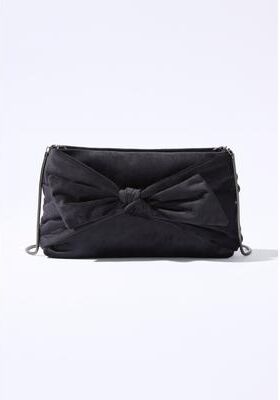
Women's Faux Velvet Bow Clutch Handbag by Accessories For All in BlackMake a statement with this bow clutch, a chic accessory that blends feminine style with everyday versatility. Designed to be worn as a clutch or shoulder bag, it keeps your essentials organized while elevating your outfit. Style it with evening...76,99 $*Shipping: 0,00 $Secure redirect to the provider
-
Uplifted Finds Clear Purse And Handbag Closet Divider Rack Transparent Wardrobe Storage Shelf Organizer Clear Purse And Handbag Closet Divider Rack Transparent Wardrobe Storage Shelf OrganizerTake absolute control of your closet real estate and establish flawless structural order over your luxury accessories with this transparent handbag storage organizer rack. Masterfully engineered with a modular slot layout, this highutility...139,97 $*Shipping: 0,00 $Secure redirect to the provider
-
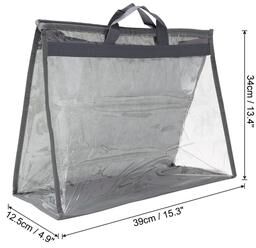
Unique Handbag Dust Bags, Clear Purse Storage Organizer Dustproof 1 PieceHandbag Dust Bags are great for organizing handbags, purses, scarves, gloves, etc, they are easily hang in closet, door, shelves to make your closet look neat and organized.22,39 $*Shipping: 0,00 $Secure redirect to the provider
-
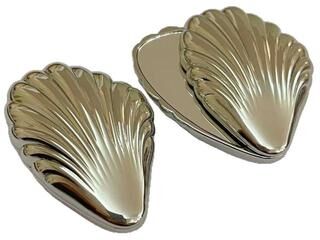
Fusion Finds Seashell Compact Makeup Mirror Double Sided Travel Metal Pocket Mirror For Purse & Handbag Seashell Compact Makeup Mirror Double Sided Travel Metal Pocket Mirror For Purse & HandbagA beautiful mirror should be as stylish as the person carrying it. This travel makeup mirror features an elegant seashellinspired design with doublesided mirrors, making quick touchups effortless wherever you go. Crafted from durable metal with a...39,97 $*Shipping: 0,00 $Secure redirect to the provider


-
Backpack or handbag?
It ultimately depends on the individual's needs and preferences. A backpack is often more practical for carrying heavier items and distributing weight evenly, making it a good choice for commuting, traveling, or outdoor activities. On the other hand, a handbag may be more suitable for professional or formal settings, as well as for carrying lighter items. Some people may even opt for both, using a backpack for daily essentials and a handbag for more formal occasions. **
-
What is the difference between a relative clause and a conjunctional clause?
A relative clause is a type of subordinate clause that provides additional information about a noun in the main clause. It typically begins with a relative pronoun such as "who," "which," or "that." A conjunctional clause, on the other hand, is a type of subordinate clause that functions as an adverb, connecting two independent clauses. It typically begins with a subordinating conjunction such as "because," "although," or "while." In summary, the main difference between the two is that a relative clause provides additional information about a noun, while a conjunctional clause connects two independent clauses. **
-
What is the difference between a conjunctional clause and an adverbial clause?
A conjunctional clause is a type of dependent clause that begins with a subordinating conjunction, such as "because," "although," or "while." It functions to connect the dependent clause to the independent clause and provide additional information about the main clause. An adverbial clause, on the other hand, is a type of dependent clause that functions as an adverb in the sentence, providing information about the time, place, manner, or condition of the action in the main clause. While both types of clauses are dependent and provide additional information, the key difference is that a conjunctional clause connects the dependent clause to the main clause, while an adverbial clause functions as an adverb in the sentence. **
-
How do I recognize a relative clause, a conjunctional clause, and an interrogative clause?
A relative clause typically starts with a relative pronoun (such as who, whom, whose, which, or that) and provides more information about a noun in the main clause. A conjunctional clause, on the other hand, is introduced by a conjunction (such as and, but, or because) and connects two independent clauses. An interrogative clause is a type of clause that asks a question and is typically introduced by an interrogative pronoun (such as who, what, when, where, why, or how) or an interrogative adverb (such as how, when, or where). **

How can I recognize a relative clause, a conjunctional clause, and an interrogative clause?
A relative clause is a type of dependent clause that typically starts with a relative pronoun (such as who, whom, whose, which, or that) and provides additional information about a noun in the main clause. A conjunctional clause, on the other hand, is a dependent clause that functions as an adverb, adjective, or noun in a sentence and is connected to the main clause by a conjunction (such as because, although, if, when, etc.). An interrogative clause is a type of clause that asks a question and typically begins with a question word (such as who, what, where, when, why, or how) or with a helping verb followed by the subject. **
Do you carry a backpack or a handbag?
As an AI, I do not carry a backpack or a handbag. However, many people choose to carry a backpack for its practicality and ability to distribute weight evenly, while others prefer a handbag for its style and convenience. The choice between a backpack and a handbag often depends on individual preferences, daily activities, and personal style. **
Top-Angebote
Products related to Conjunctional:
-
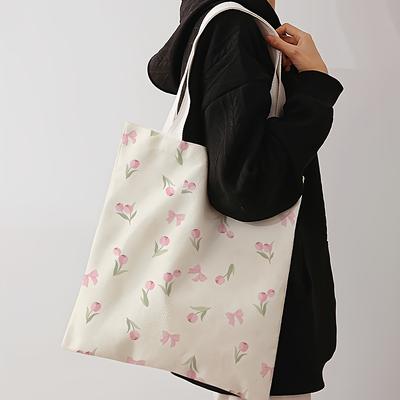
ModernMart Tulip Print Canvas Tote Bag Reusable Floral Handbag Backpack Tulip Print Canvas Tote Bag Reusable Floral Handbag BackpackAdd a touch of charm to your everyday routine with this beautifully designed tulip print canvas tote bag. Lightweight yet durable, its perfect for women who want both style and practicality in one accessory. This versatile reusable shopping bag...39,97 $*Shipping: 0,00 $Secure redirect to the provider
-
Women's Loungefly x Disney Alice in Wonderland Mini Backpack Handbag Purse by Loungefly in Pink (Size ONE SIZE)Loungefly x Disney Alice in Wonderland Mini Backpack Handbag.On the front, Disneys Alice appears at the head of the table, her glittery pink chair rising up in die-cut applique detail. Disneys Mad Hatter pours the tea, and the March Hare joins in at...85,00 $*Shipping: 0,00 $Secure redirect to the provider
-
Women's Faux Velvet Bow Clutch Handbag by Accessories For All in BlackMake a statement with this bow clutch, a chic accessory that blends feminine style with everyday versatility. Designed to be worn as a clutch or shoulder bag, it keeps your essentials organized while elevating your outfit. Style it with evening...76,99 $*Shipping: 0,00 $Secure redirect to the provider
-
Uplifted Finds Clear Purse And Handbag Closet Divider Rack Transparent Wardrobe Storage Shelf Organizer Clear Purse And Handbag Closet Divider Rack Transparent Wardrobe Storage Shelf OrganizerTake absolute control of your closet real estate and establish flawless structural order over your luxury accessories with this transparent handbag storage organizer rack. Masterfully engineered with a modular slot layout, this highutility...139,97 $*Shipping: 0,00 $Secure redirect to the provider
-
What are relative clauses and conjunctional clauses?
Relative clauses are clauses that provide additional information about a noun in the main clause. They are introduced by relative pronouns such as "who," "which," "that," and "whom." For example, in the sentence "The book that I read is very interesting," the relative clause "that I read" provides more information about the noun "book." Conjunctional clauses, on the other hand, are clauses that are connected to the main clause by conjunctions such as "and," "but," "or," "if," and "because." They can express relationships such as addition, contrast, alternative, condition, and cause. For example, in the sentence "I will go to the park if the weather is nice," the conjunctional clause "if the weather is nice" expresses a condition for the action in the main clause. **
-
What are conjunctional clauses, relative clauses, demonstrative clauses, and infinitive clauses?
Conjunctional clauses are dependent clauses that are introduced by a conjunction, such as "because," "although," or "while." They provide additional information about the main clause in a sentence. Relative clauses are also dependent clauses that provide more information about a noun in the main clause. They are introduced by relative pronouns like "who," "which," or "that." Demonstrative clauses are dependent clauses that function as adjectives and provide more information about a noun in the main clause. They are introduced by demonstrative pronouns like "this," "that," "these," or "those." Infinitive clauses are dependent clauses that are formed with an infinitive verb (to + base form of the verb). They can function as nouns, adjectives, or adverbs in a sentence. **
-
Backpack or handbag?
It ultimately depends on the individual's needs and preferences. A backpack is often more practical for carrying heavier items and distributing weight evenly, making it a good choice for commuting, traveling, or outdoor activities. On the other hand, a handbag may be more suitable for professional or formal settings, as well as for carrying lighter items. Some people may even opt for both, using a backpack for daily essentials and a handbag for more formal occasions. **
-
What is the difference between a relative clause and a conjunctional clause?
A relative clause is a type of subordinate clause that provides additional information about a noun in the main clause. It typically begins with a relative pronoun such as "who," "which," or "that." A conjunctional clause, on the other hand, is a type of subordinate clause that functions as an adverb, connecting two independent clauses. It typically begins with a subordinating conjunction such as "because," "although," or "while." In summary, the main difference between the two is that a relative clause provides additional information about a noun, while a conjunctional clause connects two independent clauses. **
Similar search terms for Conjunctional
-
Unique Handbag Dust Bags, Clear Purse Storage Organizer Dustproof 1 PieceHandbag Dust Bags are great for organizing handbags, purses, scarves, gloves, etc, they are easily hang in closet, door, shelves to make your closet look neat and organized.22,39 $*Shipping: 0,00 $Secure redirect to the provider
-
Fusion Finds Seashell Compact Makeup Mirror Double Sided Travel Metal Pocket Mirror For Purse & Handbag Seashell Compact Makeup Mirror Double Sided Travel Metal Pocket Mirror For Purse & HandbagA beautiful mirror should be as stylish as the person carrying it. This travel makeup mirror features an elegant seashellinspired design with doublesided mirrors, making quick touchups effortless wherever you go. Crafted from durable metal with a...39,97 $*Shipping: 0,00 $Secure redirect to the provider
-
Unique Handbag Dust Bags, Clear Purse Storage Organizer Dustproof 1 PieceHandbag Dust Bags are great for organizing handbags, purses, scarves, gloves, etc, they are easily hang in closet, door, shelves to make your closet look neat and organized.23,79 $*Shipping: 0,00 $Secure redirect to the provider
-
Unique Handbag Dust Bags, Clear Purse Storage Organizer Dustproof 1 PieceHandbag Dust Bags are great for organizing handbags, purses, scarves, gloves, etc, they are easily hang in closet, door, shelves to make your closet look neat and organized.23,99 $*Shipping: 0,00 $Secure redirect to the provider
-
What is the difference between a conjunctional clause and an adverbial clause?
A conjunctional clause is a type of dependent clause that begins with a subordinating conjunction, such as "because," "although," or "while." It functions to connect the dependent clause to the independent clause and provide additional information about the main clause. An adverbial clause, on the other hand, is a type of dependent clause that functions as an adverb in the sentence, providing information about the time, place, manner, or condition of the action in the main clause. While both types of clauses are dependent and provide additional information, the key difference is that a conjunctional clause connects the dependent clause to the main clause, while an adverbial clause functions as an adverb in the sentence. **
-
How do I recognize a relative clause, a conjunctional clause, and an interrogative clause?
A relative clause typically starts with a relative pronoun (such as who, whom, whose, which, or that) and provides more information about a noun in the main clause. A conjunctional clause, on the other hand, is introduced by a conjunction (such as and, but, or because) and connects two independent clauses. An interrogative clause is a type of clause that asks a question and is typically introduced by an interrogative pronoun (such as who, what, when, where, why, or how) or an interrogative adverb (such as how, when, or where). **
-
How can I recognize a relative clause, a conjunctional clause, and an interrogative clause?
A relative clause is a type of dependent clause that typically starts with a relative pronoun (such as who, whom, whose, which, or that) and provides additional information about a noun in the main clause. A conjunctional clause, on the other hand, is a dependent clause that functions as an adverb, adjective, or noun in a sentence and is connected to the main clause by a conjunction (such as because, although, if, when, etc.). An interrogative clause is a type of clause that asks a question and typically begins with a question word (such as who, what, where, when, why, or how) or with a helping verb followed by the subject. **
-
Do you carry a backpack or a handbag?
As an AI, I do not carry a backpack or a handbag. However, many people choose to carry a backpack for its practicality and ability to distribute weight evenly, while others prefer a handbag for its style and convenience. The choice between a backpack and a handbag often depends on individual preferences, daily activities, and personal style. **
* All prices are inclusive of VAT and, if applicable, plus shipping costs. The offer information is based on the details provided by the respective shop and is updated through automated processes. Real-time updates do not occur, so deviations can occur in individual cases. ** Note: Parts of this content were created by AI.